
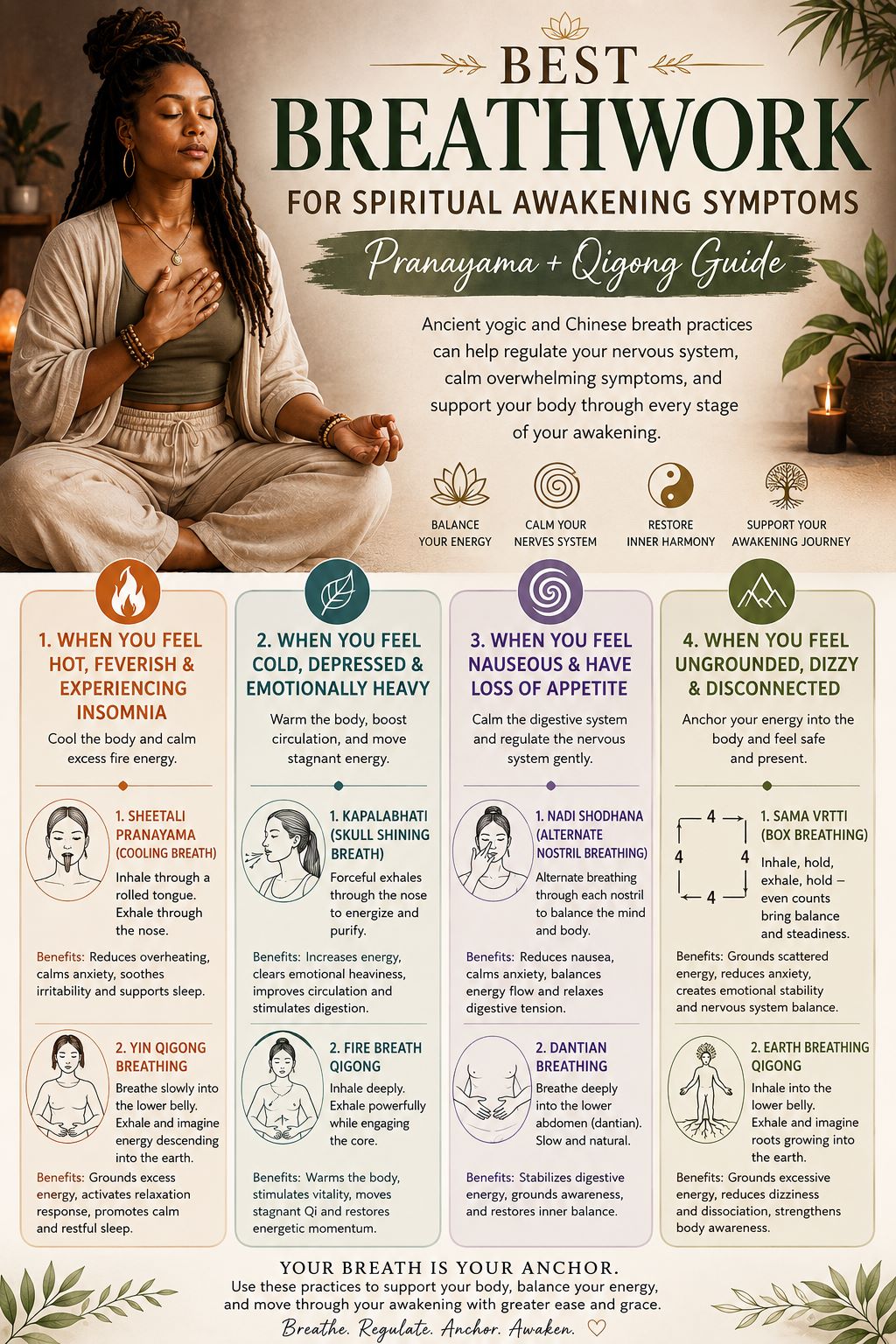
An Ayurveda, Qigong & Daoist Breathwork Guide for Nervous System Regulation During Awakening
For the first two years of my kundalini awakening, I ran high fevers, experienced periods of intense trembling, lost my appetite, dealt with severe digestive distress, and struggled with extreme nausea. It wreaked havoc on my nervous system and completely altered my sense of reality. Spiritual awakenings can be beautiful, transformative, and deeply healing—but they can also feel incredibly overwhelming for the body. I learned that firsthand.
Over the years, many of the clients I coached who were going through awakenings reported similar experiences. They described periods of intense emotional and energetic shifts accompanied by symptoms such as insomnia, nausea, temperature fluctuations, emotional heaviness, fatigue, dizziness, and feelings of disconnection from reality.
What I eventually learned through both personal experience and my studies in Ayurveda, yogic pranayama, and Chinese energetic systems such as Qigong, Tai Chi, and Daoist breathwork is that conscious breathing is one of the most powerful tools for regulating the nervous system during spiritual transformation.
In Ayurveda and yogic traditions, breath is known as prana—the life-force energy moving through the body. In Chinese energetic systems, breath influences the movement of Qi, helping restore balance within the body, regulate emotional intensity, and stabilize the nervous system. When energy shifts, the body responds.
The right breathing practices can cool excess energetic heat, warm emotional stagnation, calm nausea, stabilize anxiety, and ground scattered energy during awakening. Breath becomes medicine.
Here are some of the best pranayama and breathwork techniques for different phases of spiritual awakening.
-
Best Breathwork for Feeling Hot, Feverish & Experiencing Insomnia
One of the most common symptoms during intense energetic awakenings is overheating. You may feel restless, anxious, unable to sleep, emotionally reactive, or as though your nervous system is running too “hot.”
In Ayurveda, this is often associated with excess Pitta (fire energy). In Daoist and Qigong systems, this may reflect excess Yang energy rising upward without grounding.
The goal is to cool the nervous system and redirect energy downward.
-
Sheetali Pranayama (Cooling Breath)
Sheetali is one of the most effective yogic breathing techniques for reducing internal heat. It cools the body, calms emotional intensity, and soothes overstimulated nerves.
How to Practice:
- Sit comfortably with a straight spine
- Curl the tongue into a tube (or purse the lips if needed)
- Inhale slowly through the mouth
- Exhale gently through the nose
- Repeat for 5–10 minutes
Benefits:
- Reduces overheating
- Helps calm insomnia
- Eases irritability and agitation
- Regulates excess fire energy
-
Yin Qigong Breathing
This soft Daoist breathing practice emphasizes slow, grounding breaths into the lower abdomen to calm excess Yang energy.
How to Practice:
- Place your hands over the lower belly
- Inhale slowly into the abdomen
- Exhale slowly and imagine energy descending into the earth
- Breathe gently and quietly
Benefits:
- Grounds excess energy
- Activates the parasympathetic nervous system
- Reduces energetic overstimulation
- Encourages emotional calmness and sleep
-
Best Breathwork for Feeling Cold, Depressed & Emotionally Heavy
Not all awakenings feel fiery. Some phases feel emotionally dense, sluggish, and exhausting. You may feel disconnected, fatigued, sad, or emotionally “stuck.”
Ayurveda often associates this with excess Kapha or depleted digestive fire. Chinese systems may view it as stagnant Qi or deficient Yang energy.
The goal is to stimulate circulation, awaken life-force energy, and move emotional stagnation through the body.
-
Kapalabhati (Skull Shining Breath)
Kapalabhati is energizing, cleansing, and activating. It helps move stagnant emotional energy while increasing circulation and mental clarity.
How to Practice:
- Sit upright
- Take a deep inhale
- Forcefully exhale through the nose while pulling the belly inward
- Allow inhales to happen naturally
- Begin slowly with 20–30 rounds
Benefits:
- Increases energy and focus
- Clears emotional heaviness
- Improves circulation
- Stimulates digestive fire
-
Fire Breath Qigong
Many martial arts and Qigong systems use energizing breath patterns to stimulate Qi flow and revitalize depleted energy.
How to Practice:
- Stand with feet shoulder-width apart
- Inhale deeply through the nose
- Exhale powerfully while lightly engaging the core
- Visualize energy moving throughout the body
Benefits:
- Warms the body
- Helps combat fatigue and emotional stagnation
- Stimulates circulation and vitality
- Restores energetic momentum
-
Best Breathwork for Nausea & Loss of Appetite
During intense energetic shifts, digestion is often one of the first systems affected. Many people experience nausea, bloating, digestive distress, or a complete loss of appetite.
In Ayurveda, this is often linked to disturbed Vata energy. In Chinese energetic systems, this may involve rebellious or disrupted stomach Qi.
The goal is to calm the nervous system and gently regulate digestion.
-
Nadi Shodhana (Alternate Nostril Breathing)
Nadi Shodhana balances both hemispheres of the brain and stabilizes nervous system activity, making it especially helpful for stress-related digestive symptoms.
How to Practice:
- Close the right nostril and inhale through the left
- Close the left nostril and exhale through the right
- Inhale through the right
- Exhale through the left
- Continue slowly for 5–10 minutes
Benefits:
- Reduces anxiety-induced nausea
- Balances energy flow
- Calms the nervous system
- Relaxes digestive tension
-
Dantian Breathing
Dantian breathing is a foundational Daoist practice that focuses awareness on the lower abdomen, considered the body’s energetic center.
How to Practice:
- Place both hands below the navel
- Breathe deeply into the lower belly
- Allow the abdomen to expand naturally on the inhale
- Relax completely on the exhale
Benefits:
- Stabilizes digestive energy
- Grounds scattered awareness
- Relaxes the stomach and nervous system
- Restores energetic balance
-
Best Breathwork for Feeling Ungrounded, Dizzy & Disconnected
One of the most disorienting parts of awakening can be feeling disconnected from reality, dizzy, hypersensitive, or unable to focus. Many people describe it as feeling “floaty” or energetically scattered.
Ayurveda associates this with aggravated Vata energy. Chinese systems often describe this as energy rising excessively upward without grounding into the lower body.
The goal is to anchor energy back into the body and create nervous system stability.
-
Sama Vritti (Box Breathing)
Sama Vritti creates balance within the nervous system by regulating the inhale, hold, exhale, and pause evenly.
How to Practice:
- Inhale for 4 counts
- Hold for 4 counts
- Exhale for 4 counts
- Hold for 4 counts
- Repeat for several minutes
Benefits:
- Creates emotional stability
- Grounds scattered energy
- Reduces panic and overstimulation
- Helps regulate the nervous system
-
Earth Breathing Qigong
This grounding Qigong breathwork focuses on rooting awareness into the lower body and reconnecting with the earth.
How to Practice:
- Stand barefoot if possible
- Slightly bend the knees
- Inhale deeply into the lower belly
- Exhale slowly while imagining roots extending into the earth
Benefits:
- Grounds excessive spiritual energy
- Reduces dissociation and dizziness
- Calms anxiety and hypersensitivity
- Strengthens body awareness
Final Thoughts
Awakening is not just spiritual—it is deeply physical, emotional, and neurological as well. During periods of intense energetic transformation, the nervous system often struggles to adapt to the shifts occurring within the body and mind.
One of the biggest lessons I learned during my own awakening was that healing is not only about expanding spiritually—it’s also about learning how to regulate, nourish, and support the body through the process. Breathwork became one of the most powerful tools for helping me reconnect to my body, calm my nervous system, and move through awakening with greater stability.
In Ayurveda, yogic pranayama, Qigong, and Daoist traditions, breath is viewed as life-force energy itself. Through conscious breathing, we communicate safety to the nervous system, regulate emotional intensity, and help the body integrate profound energetic change more gently.
The goal is not to force awakening, but to support the body as it learns how to hold it. Breath by breath, the nervous system can learn to stabilize, ground, and adapt to higher states of awareness.
About the Author
Lola Scarborough, PhD is an author, Awakening Navigator, and founder of Grounded Awakenings. She helps individuals navigate spiritual awakenings, kundalini experiences, and life’s major transitions by integrating holistic wellness, practical tools, and spiritual wisdom.
🌿Learn more:https://groundedawakenings.com
📧Contact:lola@groundedawakenings.com
Continue Your Journey
Explore Super-Natural Health, Supernatural Wellness to learn more about nutrition, grounding, aromatherapy, and natural approaches to whole-person wellness.
📖https://groundedawakenings.com/my-book/
Disclaimer: This article is for educational purposes only and is not a substitute for professional medical advice. Consult your healthcare provider before using essential oils.