
Have you ever felt like your soul was expanding while your nervous system was begging for a nap?
If you’ve found yourself crying for no apparent reason, waking at 3:00 a.m., feeling emotionally overwhelmed, experiencing heightened intuition, or sensing that your entire perspective on life is changing, you may be moving through what many people describe as a spiritual awakening.
While spiritual awakenings can be beautiful and deeply transformative, they are not always peaceful. In fact, many people experience periods of emotional intensity, anxiety, insomnia, overstimulation, or a feeling of being disconnected from their physical body. I’ve found that one of the biggest misconceptions about awakening is that it should feel blissful all the time. In reality, awakening often asks us to release old beliefs, heal emotional wounds, and learn to feel safe in a completely new way.
Over the years, many clients have shared that they felt like they were “coming apart” before they realized they were actually coming home to themselves.
One of the first things I encourage is slowing down.
Before reaching for another book, another meditation, or another YouTube video searching for answers, sometimes the most healing thing you can do is simply make yourself a warm cup of herbal tea, sit quietly, and allow your body to catch up with what your spirit is already discovering.
A daily tea ritual isn’t just about the herbs themselves. It creates space to breathe, reconnect with your body, and remind your nervous system that it is safe.
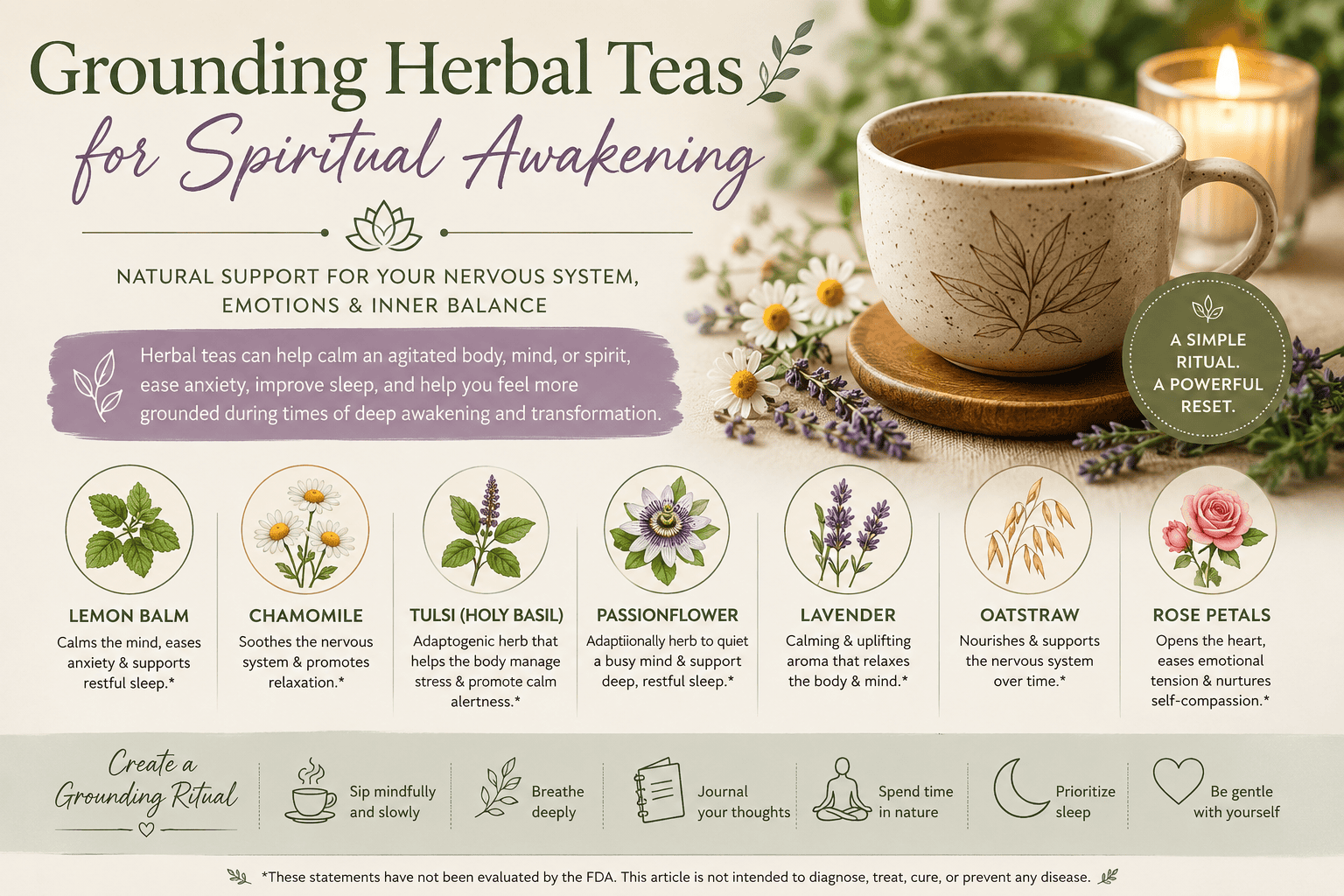
Below are several of my favorite herbs that have been traditionally used to support relaxation, emotional balance, and nervous system wellness during times of stress and transition.
Why Your Nervous System Needs Grounding During a Spiritual Awakening
Many people think spiritual awakening only affects the mind or soul, but your body experiences it, too. Loss of appetite, loss of or surging libido, insomnia, restless leg syndrome, upset digestion, and heightened sensitivity to sound or smells are all fairly common physical experiences.
Whether you view awakening as an energetic shift, deep emotional healing, or profound personal transformation, your nervous system is constantly processing new information. This can leave you feeling overstimulated, emotionally raw, mentally exhausted, or physically tense.
In my practice, many people describe symptoms such as:
- Difficulty falling asleep
- Vivid dreams
- Racing thoughts
- Feeling emotionally sensitive
- Startling easily
- Feeling disconnected from their body
- Anxiety or restlessness
- Mental overwhelm
- Fatigue after emotional releases
While these experiences can occur for many different reasons and should never replace appropriate medical evaluation when needed, creating daily grounding rituals may help support overall well-being during periods of change.
One of my favorite rituals is herbal tea. I call it Nature’s magic in a cup. Thich Nhat Hanh, one of the greatest spiritual masters of my time, says this of tea: “Tea is an act complete in its simplicity. When I drink tea, there is only me and the tea. The rest of the world dissolves. There are no worries about the future. No dwelling on past mistakes.” Beautifully said! I invite you to make your cup of tea a meditation!
Preparing tea naturally slows us down. The warmth of the cup, the aroma of the herbs, and the act of sitting quietly all encourage the body to shift into a calmer state. I’ve listed some of my favorites below, along with instructions for preparing and any contraindications.
1. Lemon Balm (Melissa officinalis)
If I had to choose one herb that seems to become a favorite among clients navigating emotionally intense periods, lemon balm would be near the top of the list.
Traditionally used for centuries to encourage relaxation and emotional balance, lemon balm has a bright, uplifting flavor that feels comforting without being overly sedating.
I’ve often discussed lemon balm with clients who struggle with the “wired but exhausted” feeling that sometimes accompanies spiritual growth. Many people also enjoy drinking it before bedtime as part of a calming nighttime routine.
Traditional Tea Preparation
- 1–2 teaspoons dried leaves
- Steep 5–10 minutes
- Drink 1–3 cups daily
Contraindications
Lemon balm may increase drowsiness when combined with sedative medications or alcohol. Individuals with thyroid disorders or those taking thyroid medications should speak with their healthcare provider before using lemon balm regularly, as it may influence thyroid function. Avoid if you have a known allergy to plants in the mint family.
2. Chamomile (Matricaria chamomilla)
Chamomile has earned its reputation as one of the world’s best-loved calming herbs.
Its gentle floral flavor has made it a bedtime favorite for generations, but beyond promoting relaxation, chamomile also encourages us to slow down emotionally.
When clients tell me their awakening has left them emotionally vulnerable or struggling with occasional sleepless nights, chamomile is frequently one of the herbs we discuss first because of its long history of traditional use as part of an evening wind-down routine.
I also love combining chamomile with meditation or prayer before bed. Creating multiple calming signals for the nervous system often has a greater impact than relying on one practice alone.
Traditional Tea Preparation
- 2–3 teaspoons dried flowers
- Steep 5–10 minutes
- Enjoy 1–4 cups daily
Contraindications
Avoid chamomile if you have allergies to ragweed, daisies, chrysanthemums, or other members of the Asteraceae family. It may increase the effects of blood-thinning medications, sedatives, or alcohol.
3. Tulsi (Holy Basil)
Known in Ayurveda as “The Queen of Herbs,” tulsi is cherished for helping the body adapt during times of physical and emotional stress. Unlike herbs that simply make you sleepy, tulsi is traditionally used to encourage calm focus and emotional resilience.
Many clients tell me that awakening doesn’t necessarily make them tired—it makes them feel like their thoughts never stop.
Tulsi can become a beautiful daily companion because it promotes a sense of centeredness while still allowing you to remain mentally clear.
Its slightly spicy, earthy flavor also makes it one of my favorite daytime teas.
Traditional Tea Preparation
- 1–2 teaspoons dried leaves
- Steep 8–10 minutes
- Drink 2–3 cups daily
Contraindications
Tulsi may lower blood sugar and may have mild blood-thinning effects. If you take medications for diabetes or anticoagulants, consult your healthcare provider before regular use. Medicinal amounts are generally not recommended during pregnancy unless advised by a qualified healthcare professional.
4. Oatstraw (Avena sativa)
While some herbs help us relax immediately, oatstraw works a little differently.
Oatstraw is considered a nourishing nervine—an herb traditionally used to gently support and replenish the nervous system over time rather than producing an immediate calming effect.
I frequently discuss oatstraw with clients who describe feeling emotionally depleted after months of intense healing work. It reminds us that awakening isn’t only about releasing old patterns; it’s also about rebuilding ourselves with nourishment, patience, and compassion.
Rich in naturally occurring minerals, oatstraw is one of my favorite herbs to enjoy as a long-steeped infusion.
Traditional Tea Preparation
- 1–2 tablespoons dried herb
- Steep at least 20 minutes or prepare as an overnight infusion
- Enjoy 1–3 cups daily
Contraindications
Avoid if you have a true oat allergy. Those with celiac disease should choose certified gluten-free oatstraw to reduce the risk of cross-contamination.
Sometimes the greatest medicine isn’t found in doing more—it is found in creating enough stillness for your body to remember that it is safe.
The remaining herbs on this list are some of my favorite allies for evening relaxation, emotional grounding, and creating a bedtime ritual that supports both the body and the spirit.
5. Passionflower (Passiflora incarnata)
If there is one herb I consistently think of when someone tells me, “My body is exhausted, but my mind just won’t shut off,” it’s passionflower.
Passionflower has a long history of traditional use as a calming nervine, especially in the evening. During periods of spiritual awakening, many people describe racing thoughts, vivid dreams, or feeling mentally “plugged in” long after the rest of the house has gone to sleep.
I’ve recommended discussing passionflower with healthcare providers for clients who experience occasional sleeplessness or mental restlessness during emotionally intense periods because creating a calming nighttime ritual can be just as important as what we put into the tea itself.
I encourage clients to brew a cup about an hour before bed, dim the lights, put away electronics, and allow themselves permission to simply be still.
Traditional Tea Preparation
- 1–2 teaspoons dried herb
- Steep 10–15 minutes
- Enjoy 1–2 cups daily, preferably in the evening
Contraindications
Passionflower may increase drowsiness when combined with sedatives, sleep medications, or alcohol. It is generally not recommended during pregnancy unless advised by a qualified healthcare professional.
6. Lavender (Lavandula angustifolia)
Most people know lavender because of its beautiful fragrance, but it also makes a wonderfully soothing herbal tea.
One of the things I love about lavender is that it engages more than just the sense of taste. As the steam rises from the cup, many people naturally begin breathing more slowly and deeply without even realizing it. That simple act of slowing the breath can become part of the grounding process.
For clients who describe feeling emotionally “frayed” or overstimulated, lavender often becomes part of a gentle evening ritual rather than a quick fix.
Traditional Tea Preparation
- 1–2 teaspoons dried flowers
- Steep 5–10 minutes
- Up to 2 cups daily
Contraindications
Lavender may increase drowsiness when combined with sedative medications or alcohol. Individuals with a known allergy to lavender should avoid its use.
7. Rose Petals (Rosa spp.)
Rose is one of the most overlooked herbs in the wellness world.
While it may not be the first herb people think of for nervous system support, rose has long been associated with emotional comfort, self-compassion, and opening the heart.
Many clients going through a spiritual awakening tell me they feel emotionally tender. Old memories surface. Relationships shift. Grief appears unexpectedly. Joy arrives just as suddenly.
Rose reminds us that healing doesn’t always require force. Sometimes healing simply asks us to soften.
Its delicate flavor blends beautifully with chamomile, lemon balm, and lavender to create a deeply comforting evening tea.
Traditional Tea Preparation
- 1 tablespoon dried culinary-grade rose petals
- Steep 5–10 minutes
- Enjoy 1–3 cups daily
Contraindications
Rose petals are generally considered safe for most people when used as a tea. Be sure to use only food-grade or herbal-grade rose petals that have not been treated with pesticides or chemicals.
My Favorite Grounding Evening Tea Blend
This is one of my favorite combinations to enjoy when life feels overwhelming or when my nervous system is asking for a little extra support.
Grounding Tea Blend
- 1 teaspoon Lemon Balm
- 1 teaspoon Chamomile
- 1 teaspoon Oatstraw
- ½ teaspoon Lavender
- A small pinch of Rose Petals
Steep for 10–15 minutes in freshly boiled water.
If desired, add a little local raw honey once the tea has cooled slightly.
I love sipping this blend while journaling, reading something uplifting, or simply sitting quietly on the porch as the sun sets.
Remember, the ritual itself is part of the medicine.
Other Ways to Ground During a Spiritual Awakening
Tea is just one piece of supporting the nervous system. What we nourish ourselves with matters just as much as the herbs we drink. If you’re looking for additional ways to feel more grounded, I invite you to read my article on Foods to Eat During a Spiritual Awakening, where I share nourishing foods that can help you feel more connected, balanced, and supported during times of transformation.
Over the years, I’ve found that the people who navigate awakening with the greatest sense of peace usually combine several simple grounding practices rather than relying on only one.
Some of my favorite recommendations include:
- Walking barefoot on the earth where it’s safe to do so.
- Spending time in nature every day.
- Eating nourishing whole foods with plenty of protein and healthy fats.
- Practicing slow diaphragmatic breathing.
- Limiting overstimulation from social media and constant news.
- Creating a consistent bedtime routine.
- Gentle yoga or stretching.
- Prayer or meditation.
- Journaling emotional experiences instead of suppressing them.
- Staying hydrated throughout the day.
Healing isn’t about perfection. It’s about giving your body enough safety that your spirit can continue unfolding.
Final Thoughts
One of the greatest lessons I’ve learned—both personally and through working with clients—is that spiritual awakening isn’t about escaping the body. It’s about learning to live fully within it, and letting go of all the things that hold us back.
As we expand spiritually, our nervous system deserves just as much love and attention as our soul.
Herbal teas won’t instantly erase every difficult emotion or sleepless night, but they can become beautiful companions along the journey. Each cup offers an invitation to slow down, breathe deeply, reconnect with yourself, and remember that transformation doesn’t have to feel rushed.
Sometimes the most profound healing happens quietly.
One cup of tea.
One deep breath.
One peaceful moment at a time.
May your journey be filled with grace, groundedness, and the gentle reminder that you are exactly where you need to be.
Frequently Asked Questions
Can spiritual awakening cause anxiety?
Many people describe experiencing emotional sensitivity, racing thoughts, restlessness, or feeling overwhelmed during what they consider a spiritual awakening. While these experiences are commonly discussed in spiritual communities, persistent anxiety, panic attacks, or symptoms that interfere with daily life should always be evaluated by a qualified healthcare professional.
What is the best herbal tea for spiritual awakening?
There isn’t one perfect tea for everyone. Many people enjoy chamomile, lemon balm, tulsi, oatstraw, passionflower, lavender, and rose as part of a calming daily or evening ritual. The best choice depends on your individual needs, health history, and any medications you may be taking.
Which herbs naturally support a calm nervous system?
Several herbs have a long history of traditional use for promoting relaxation and supporting emotional well-being, including:
- Lemon Balm
- Chamomile
- Tulsi (Holy Basil)
- Passionflower
- Oatstraw
- Lavender
- Rose Petals
These herbs work best alongside healthy lifestyle habits such as restorative sleep, nourishing food, movement, stress management, and time in nature.
Can herbal tea help with insomnia during a spiritual awakening?
Many people find that combining caffeine-free herbal tea with healthy sleep habits, meditation, deep breathing, and limiting screen time before bed creates a relaxing bedtime routine. If insomnia is severe, persistent, or accompanied by other concerning symptoms, seek guidance from your healthcare provider.
How much herbal tea is safe to drink each day?
The answer depends on the herb. Many gentle herbal teas are traditionally enjoyed in amounts of one to three cups daily, although some herbs have specific precautions or interactions. Always follow preparation guidelines and consult a qualified healthcare professional if you are pregnant, nursing, have a medical condition, or take prescription medications.
A Gentle Invitation
If you’re walking through a season of awakening, know that you don’t have to navigate it alone.
At Grounded Awakenings with Lola, I believe true wellness comes from honoring the connection between the body, mind, and spirit. Whether you’re exploring herbal remedies, learning to nourish your nervous system, or seeking natural ways to support your well-being, my hope is that you’ll find encouragement, education, and inspiration here.
Take a deep breath, pour yourself a warm cup of tea, and remember—healing doesn’t always happen in dramatic moments. More often, it unfolds through the simple rituals we return to each day.
I’d love for you to explore the other articles and resources here at Grounded Awakenings with Lola as we continue this journey together.
About the Author
Lola Scarborough, PhD is an author, Awakening Navigator, and founder of Grounded Awakenings. She helps individuals navigate spiritual awakenings, kundalini experiences, and life’s major transitions by integrating holistic wellness, practical tools, and spiritual wisdom.
🌿Learn more:https://groundedawakenings.com
📧Contact:lola@groundedawakenings.com
Continue Your Journey
Explore Super-Natural Health, Supernatural Wellness to learn more about nutrition, grounding, aromatherapy, and natural approaches to whole-person wellness.
📖https://groundedawakenings.com/my-book/
Disclaimer: This article is for educational purposes only and is not a substitute for professional medical advice. Consult your healthcare provider before using essential oils.